How to Use Social Media Analytics to Improve Performance
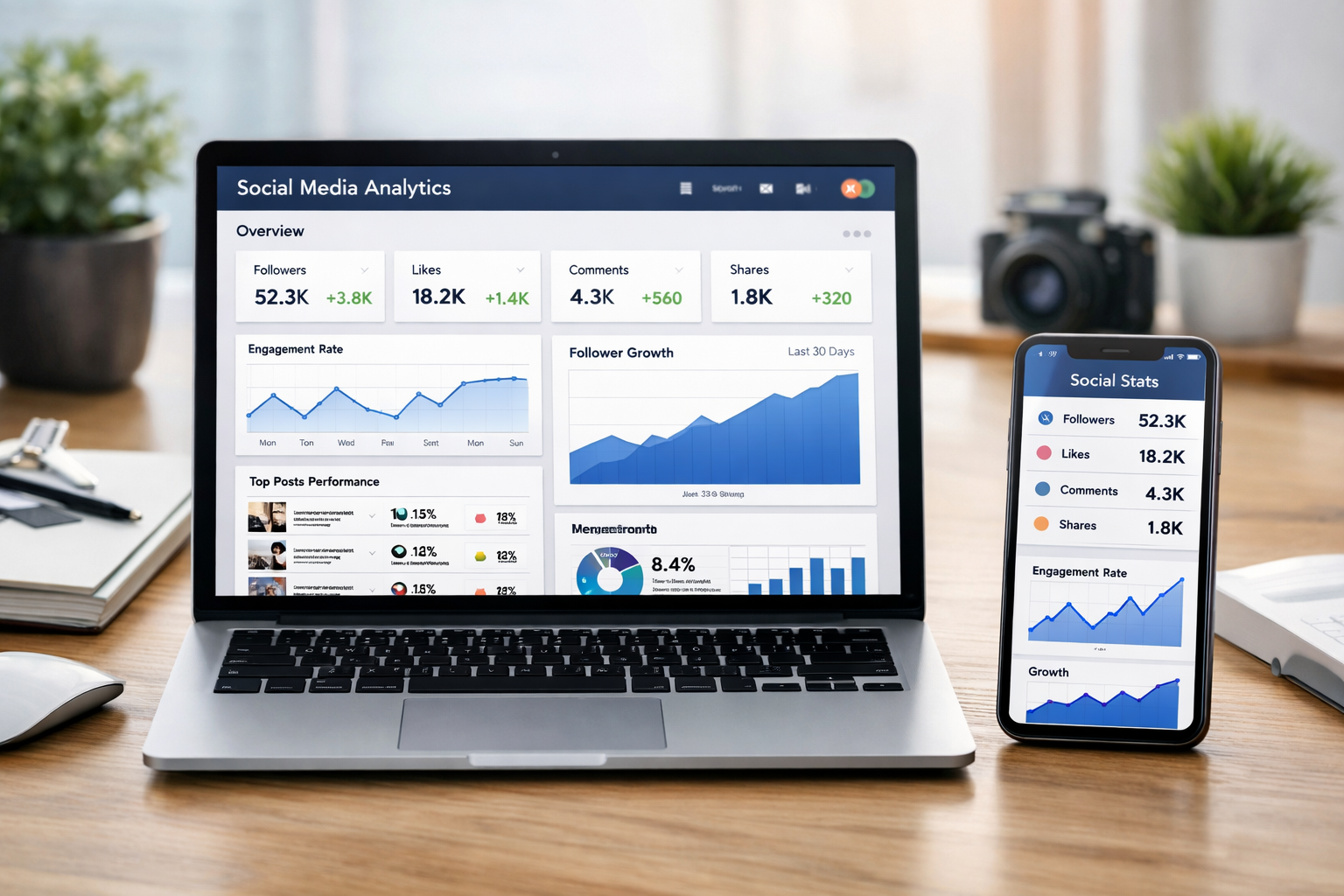


Turn Social Media Data Into Smarter, Higher-Performing Campaigns
You post consistently, test new ideas, and stay active across platforms, yet results still feel unpredictable. One post takes off, another underperforms, and it is difficult to explain why. This uncertainty is one of the most common frustrations brands face with social media marketing. The good news is that the answers already exist in your data. You just need to know how to read them.
Social media analytics turns guesswork into clarity. Instead of relying on assumptions or surface-level engagement, analytics reveals what actually drives performance, how audiences behave, and which efforts deliver real value versus wasted time or budget. For brands competing in the crowded United States market, this insight is no longer optional. It is essential.
In this guide, you will learn how to use social media analytics to improve performance in a practical, repeatable way. We will explain what to track, how to interpret results, and how to transform insights into smarter content, stronger campaigns, and measurable growth.
By the end, you will know how to identify the metrics that matter most to your goals, translate raw data into actionable strategy, and continuously optimize performance using real insights rather than assumptions.
Let’s begin by establishing a clear foundation.
Understanding Social Media Analytics and Why It Matters
So, what is social media analytics? Social media analytics is the process of collecting, analyzing, and interpreting data from social platforms to evaluate content performance, audience behavior, and campaign effectiveness. This data comes from native platform insights such as Instagram, Facebook, LinkedIn, TikTok, and X, as well as third-party social media analytics tools.
What makes social media analytics powerful is its ability to connect activity to outcomes. Instead of focusing on vanity metrics alone, analytics shows how your content contributes to business objectives like brand awareness, engagement, lead generation, or conversions.
For businesses operating in the U.S., where competition for attention is intense across nearly every industry, analytics provides a meaningful advantage. It allows brands to move faster, adapt to audience preferences, spot trends early, and justify marketing decisions with data rather than opinion.
Key benefits of understanding social media analytics include improved content relevance and engagement, clearer insights into audience preferences, better allocation of time and ad spend, and stronger alignment between social media activity and business goals.
A common misconception is that analytics is only valuable for large brands with complex campaigns. In reality, even small brands see gains when they use data to make simple adjustments such as posting at the right time, choosing the right formats, or refining messaging.
How to Use Social Media Analytics Strategically
Understanding social media analytics is only useful if it is applied with intention. Strategic use means tracking the right data, reviewing it consistently, and turning insights into action.
Define Goals and Success Metrics First
Every analytics effort should begin with clear goals. Without defined objectives, data becomes noise instead of guidance. Start by identifying what success looks like for your brand.
Common social media goals include increasing brand awareness, growing engagement, driving website traffic, generating leads, or supporting conversions. Each goal requires different metrics. Awareness-focused strategies emphasize reach and impressions, while lead-focused strategies prioritize click-through rates and conversions.
Once goals are clear, connect them to measurable KPIs. This step ensures your social media analytics efforts stay focused and relevant rather than reactive.
Track Platform-Specific Performance
Each platform rewards different behaviors, so analytics must be reviewed in context. Instagram prioritizes engagement signals like saves and shares. LinkedIn emphasizes clicks and professional interaction. TikTok focuses heavily on watch time and completion rate.
Review native insights for each platform separately. Look for patterns in which formats perform best, how posting frequency affects engagement, and where audience drop-off occurs. Platform-specific tracking helps avoid one-size-fits-all strategies and leads to more precise optimization.
Analyze Audience Behavior and Engagement
Engagement analysis goes far beyond counting likes and comments. Social media analytics reveals who your audience is, when they are active, and how they interact with different types of content.
Look closely at demographic data, active time windows, and engagement trends. You may discover that your audience prefers educational content during the workweek or short-form video over static visuals.
These insights allow you to refine tone, timing, and content formats, often improving performance without increasing budget.
Turn Insights Into Action
Data only creates value when it leads to action. After reviewing analytics, translate findings into specific changes. If carousels outperform single images, increase their use. If engagement drops when posting daily, adjust frequency.
Use a simple optimization loop. Review analytics on a set schedule, identify trends, adjust strategy, and measure results. This iterative process keeps performance improving over time.
Social Media Marketing Measurement That Aligns With Business Goals
Effective social media marketing measurement focuses on outcomes, not just activity. Posting frequently does not equal success if content does not move audiences closer to business goals.
Measurement should connect social media performance to broader marketing KPIs such as website traffic, lead quality, or assisted conversions. This is where analytics helps justify social investment and demonstrate ROI.
Brands that integrate social data into their broader reporting gain a clearer picture of how social contributes to the marketing funnel rather than operating in isolation.
Content Performance Analysis That Drives Growth
Content performance analysis helps identify what resonates and what does not. By comparing performance across formats, topics, and messaging styles, you can double down on what works.
Analyze metrics like engagement rate, saves, shares, and completion rate. Look for patterns over time rather than isolated spikes. High-performing content often shares common traits such as format, tone, or value offered to the audience.
Consistent analysis turns content creation from guesswork into a repeatable system.
Social Media Monitoring and Analysis Beyond Your Own Posts
Social media monitoring and analysis extends beyond your content. It includes tracking brand mentions, sentiment, competitor performance, and industry trends.
Monitoring tools help you understand how audiences talk about your brand and competitors, identify emerging conversations, and spot potential issues early. This insight supports reputation management and informs content ideas.
Monitoring is especially valuable during campaigns or launches when feedback can change quickly.
Choosing the Right Social Media Analytics Tools
There are many social media analytics tools available, ranging from native platform dashboards to advanced third-party solutions. Native tools are often sufficient for basic tracking, while third-party tools offer cross-platform reporting, automation, and deeper insights.
The right tool depends on campaign complexity, reporting needs, and team size. The key is consistency. A simple tool used well is more effective than a complex tool used inconsistently.
Building an Effective Social Media Marketing Report
A strong social media marketing report tells a story. It explains what happened, why it happened, and what to do next.
Effective reports focus on trends, insights, and recommendations rather than overwhelming stakeholders with raw data. Visual summaries, clear benchmarks, and concise commentary improve understanding and decision-making.
Reporting cadence matters as well. Weekly reviews support quick adjustments, while monthly reports provide strategic perspective.
Real-World Applications of Social Media Analytics
Analytics-driven decisions produce measurable results across industries.
A mid-sized U.S. eCommerce brand discovered through analytics that short-form video delivered significantly higher engagement than static posts. Reallocating resources to video and adjusting posting times increased social-driven traffic by over 30 percent.
A B2B services firm analyzed LinkedIn data and found thought leadership content generated more profile visits and higher-quality leads than promotional posts. Adjusting the content mix shortened sales cycles and improved lead quality.
A local service provider used engagement analysis to identify which posts drove direct messages. Optimizing around those formats increased inbound inquiries without raising ad spend.
These examples show how understanding social media analytics translates directly into business impact.
Best Practices and Common Analytics Mistakes
Even with access to strong data, mistakes can limit results. Best practices include focusing on business-aligned metrics, comparing trends rather than isolated numbers, testing one variable at a time, and documenting insights and decisions.
A common mistake is overreacting to short-term fluctuations. Analytics works best when reviewed consistently and evaluated over time rather than day to day.
Another pitfall is tracking too many metrics without purpose. Simplicity and alignment drive better decisions.
Integrating Analytics With Broader Digital Strategy
Social media analytics should not exist in isolation. Integrating insights with SEO, email, and paid media creates a more complete view of performance.
For example, identifying high-performing social content can inform blog topics or paid campaigns. Aligning social insights with technical improvements, like those outlined in this technical SEO and backend optimization guide, strengthens overall digital performance.
Brands that connect analytics across channels move faster and make smarter decisions.
Using Analytics to Continuously Improve Performance
Social media analytics transforms marketing from intuition-driven to insight-led. By defining goals, tracking meaningful metrics, and applying insights consistently, brands can improve performance without increasing effort or spend.
Analytics helps you understand your audience, refine content, and prove the value of social media marketing. It replaces guesswork with confidence and creates a clear path to growth.
For brands ready to scale performance across platforms, working with experienced digital partners can accelerate results. Express Media supports data-driven strategies across social, SEO, and content, helping brands turn analytics into measurable growth. Explore their services, review client work, and see who they partner with through their clients to understand how integrated analytics drives results.
Social Media Analytics FAQs
What are social media analytics used for?
Social media analytics measures content performance, audience behavior, and campaign effectiveness. It helps marketers identify what works, what does not, and how to optimize strategy for better outcomes.
Which social media analytics metrics matter most?
The most important metrics depend on your goals. Common examples include engagement rate, reach, click-through rate, conversions, and audience growth. Metrics should always align with business objectives.
How often should social media analytics be reviewed?
Most brands benefit from weekly check-ins and monthly performance reviews. This cadence balances responsiveness with accurate trend analysis.
Are native analytics tools enough?
Native tools provide strong baseline insights. Third-party tools offer deeper reporting and cross-platform analysis. The right mix depends on campaign complexity.
Can small businesses benefit from social media analytics?
Yes. Even basic analytics can reveal which content drives engagement or inquiries. Small, data-informed changes often produce meaningful gains for growing brands.
Contact Us
