What Are Programmatic Guaranteed Deals and Why Use Them?
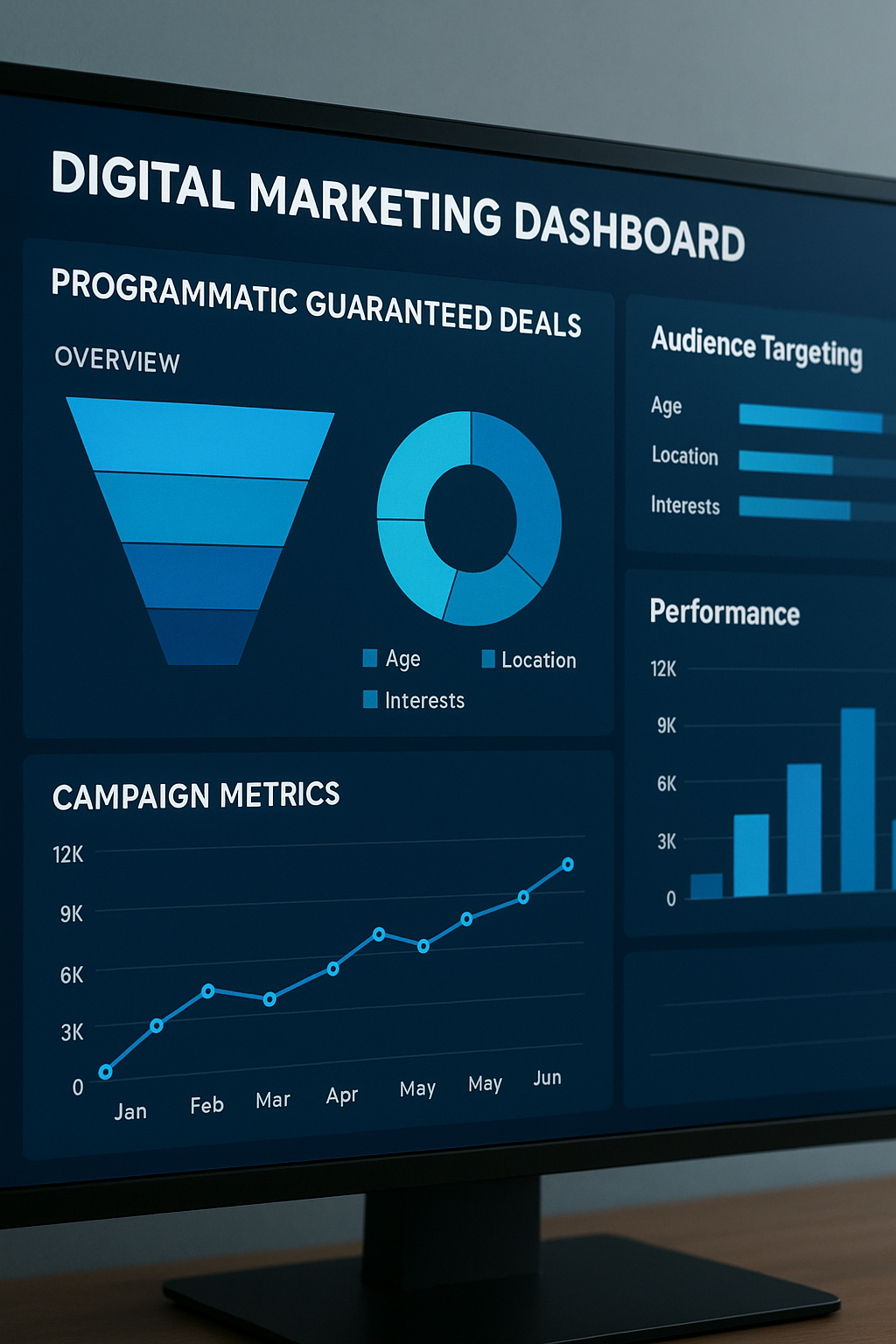


Digital advertising can sometimes feel like a gamble. You set up campaigns, enter auctions, compete with countless other advertisers, and hope your ads appear in the right environments at the right time. Even with advanced targeting, results can feel unpredictable, especially when premium inventory is scarce or highly competitive. This uncertainty is exactly why programmatic guaranteed deals have become increasingly popular.
Programmatic guaranteed deals offer a more controlled and predictable way to buy digital advertising. Instead of relying on real-time auctions, advertisers secure inventory and pricing in advance through automated systems. This means you know exactly where your ads will run, how many impressions you will receive, and how much you will pay. For brands that value certainty, brand safety, and consistent delivery, programmatic guaranteed advertising provides a powerful alternative to auction-based buying.
In this guide, we will clearly explain programmatic guaranteed deals, how they work, how they compare to private marketplaces, and why they are an important part of modern media strategies. By the end, you will understand when and why to use programmatic guaranteed deals and how they fit into a broader programmatic advertising approach.
Understanding Programmatic Guaranteed Deals
At a fundamental level, programmatic guaranteed deals are automated agreements between advertisers and publishers that guarantee ad delivery at a fixed price. Inventory is reserved ahead of time, and impressions are delivered automatically without bidding competition.
This approach is sometimes referred to as:
- Programmatic guaranteed
- Automated guaranteed
- Programmatic direct advertising
- Programmatic guaranteed advertising
While the terminology may vary, the underlying concept remains the same. Advertisers and publishers agree on inventory, pricing, and delivery terms before a campaign launches, and technology handles execution.
Unlike open exchanges, where impressions are auctioned in real time, programmatic guaranteed deals remove uncertainty. There is no bidding war, no fluctuating CPMs, and no risk of missing impression goals due to competition.
What Is Programmatic Direct?
To fully understand guaranteed deals, it helps to clarify what is programmatic direct. Programmatic direct refers to automated, one-to-one transactions between an advertiser and a publisher. These deals bypass open auctions and are executed through programmatic platforms.
Programmatic direct includes:
- Programmatic guaranteed deals
- Non-guaranteed preferred deals
The key difference is commitment. Programmatic guaranteed deals involve guaranteed impressions and fixed pricing, while preferred deals offer priority access but no delivery guarantee.
When people ask what is programmatic direct, the answer is simple: it is the automation of traditional direct buying, combining the efficiency of programmatic technology with the certainty of direct publisher agreements.
How Programmatic Guaranteed Deals Work
Although they may sound complex, programmatic guaranteed deals follow a straightforward process.
First, the advertiser and publisher agree on the terms of the deal. This includes impression volume, pricing, ad formats, targeting parameters, and campaign timing. These terms are typically negotiated directly but executed programmatically.
Next, the deal is set up within a demand-side platform and publisher system. Inventory is reserved for the advertiser, ensuring availability throughout the campaign.
Once the campaign launches, impressions are delivered automatically according to the agreement. There is no auction, no bid adjustments, and no competition for that reserved inventory. Reporting and optimization still occur, but delivery is guaranteed.
This automation reduces operational overhead while preserving the certainty advertisers expect from direct buying.
Programmatic Guaranteed vs PMP
One of the most common questions advertisers ask is programmatic guaranteed vs PMP. While both involve private access to inventory, they are not the same.
A programmatic private marketplace (PMP) is a private auction where selected advertisers can bid on a publisher’s inventory. Pricing is not fixed, and impressions are not guaranteed. Advertisers still compete, but within a controlled environment.
In contrast, programmatic guaranteed deals:
- Lock in pricing upfront
- Guarantee impression delivery
- Remove auction dynamics entirely
PMPs offer flexibility and access to premium inventory but retain auction uncertainty. Programmatic guaranteed deals prioritize predictability and control.
Understanding this distinction helps advertisers choose the right buying method based on campaign goals.
Key Benefits of Programmatic Guaranteed Deals
There are many benefits of programmatic advertising, but guaranteed deals offer specific advantages that stand out.
Predictable Delivery
With programmatic guaranteed deals, advertisers know exactly how many impressions will be delivered and when. This is especially valuable for time-sensitive campaigns, product launches, or sponsorship-style placements.
Fixed Pricing
Guaranteed deals operate on fixed CPMs. This eliminates budget volatility and protects advertisers from rising costs due to competition.
Premium Inventory Access
Publishers often reserve their most valuable placements for direct and guaranteed deals. This gives advertisers access to high-quality, brand-safe environments that may not be available through open exchanges.
Stronger Publisher Relationships
Programmatic direct advertising encourages collaboration between advertisers and publishers. These relationships often lead to better placements, custom opportunities, and long-term partnerships.
Operational Efficiency
Automation reduces manual trafficking, insertion orders, and reconciliation. Campaigns run smoothly with fewer operational bottlenecks.
When to Use Programmatic Guaranteed Deals
Programmatic guaranteed deals are not always the right choice, but they are ideal in specific scenarios.
They are particularly effective when:
- You need guaranteed impression delivery
- Brand safety and environment quality are critical
- Campaign timing is fixed and non-negotiable
- You are running high-impact or premium placements
- Budget predictability is a priority
For example, a brand launching a major campaign may use guaranteed deals to secure homepage takeovers or premium video inventory. Another brand may use them to ensure consistent reach during peak seasonal periods.
Programmatic Guaranteed Advertising vs Open Auction Buying
Comparing programmatic guaranteed advertising to open auction buying highlights why many advertisers use a hybrid approach.
Open auctions offer flexibility, scale, and often lower CPMs, but they come with uncertainty. Delivery is not guaranteed, pricing fluctuates, and premium inventory may be unavailable.
Guaranteed deals trade flexibility for certainty. They ensure delivery and pricing but require upfront commitment.
Many advertisers combine both methods, using guaranteed deals for core placements and auctions for incremental reach.
Programmatic Guaranteed Deals and Media Strategy
Programmatic guaranteed deals work best when integrated into a broader media strategy. They should not be viewed in isolation but as part of a holistic approach to programmatic buying.
Effective strategies often include:
- Guaranteed deals for premium placements
- Private marketplaces for controlled flexibility
- Open auctions for scalable reach
Agencies and brands that plan this mix carefully often showcase strong results, as seen in real-world examples from Express Media’s portfolio of work.
Common Challenges and Considerations
While powerful, programmatic guaranteed deals do come with trade-offs.
One challenge is higher upfront cost. Premium inventory often commands higher CPMs than open auction placements. However, these costs reflect quality, certainty, and environment.
Another consideration is reduced flexibility. Once a deal is set, making changes mid-campaign can be difficult. This requires careful planning upfront.
Inventory availability can also be limited, as not all publishers offer guaranteed deals at scale.
These challenges can be mitigated by starting with smaller commitments, aligning deals with clear objectives, and working with experienced partners.
How to Get Started With Programmatic Guaranteed Deals
Getting started does not require deep technical expertise, but it does require planning.
Begin by defining campaign goals. Decide whether the priority is reach, awareness, or premium visibility.
Next, identify publishers that align with your audience and brand values. Many premium publishers offer programmatic direct opportunities.
Then, negotiate deal terms carefully. Clarify impression volume, pricing, targeting, and reporting expectations.
Finally, set up the deal through your DSP and monitor performance throughout the campaign.
Brands that want guidance through this process often rely on experienced teams, such as those offering support through Express Media’s marketing services.
Measuring Success With Guaranteed Deals
Measurement remains critical, even when delivery is guaranteed. Advertisers should still track key performance indicators to ensure campaigns achieve their objectives.
Common metrics include:
- Delivered impressions
- Viewability rates
- Engagement metrics
- Conversion performance
Because inventory and pricing are fixed, optimization often focuses on creative, targeting refinement, and placement performance rather than bidding adjustments.
The Role of Agencies in Programmatic Guaranteed Advertising
Many advertisers choose to work with agencies to manage guaranteed deals. Agencies bring experience in negotiation, platform setup, and optimization.
They also help advertisers balance guaranteed deals with other buying methods and ensure alignment with broader media goals.
Client-agency collaboration examples, such as those highlighted on Express Media’s client showcase, demonstrate how strategic guidance can improve outcomes.
Programmatic Guaranteed Deals and the Future of Advertising
As digital advertising continues to evolve, programmatic guaranteed deals are becoming more important, not less.
Privacy changes and the decline of third-party cookies are pushing advertisers toward trusted publisher relationships and first-party data. Guaranteed deals support this shift by strengthening direct connections between buyers and sellers.
At the same time, automation continues to improve. Setup, reporting, and optimization are becoming faster and more transparent, making guaranteed deals easier to manage at scale.
Video, connected TV, and premium digital formats are also driving growth in programmatic guaranteed advertising, as advertisers seek certainty in high-value environments.
Programmatic Guaranteed vs Preferred Deals
Another common comparison is programmatic guaranteed vs preferred deals. Preferred deals offer advertisers first look at inventory but do not guarantee impressions. Pricing is fixed, but delivery is not.
Guaranteed deals go one step further by ensuring impressions are delivered. For campaigns where delivery matters more than flexibility, guaranteed deals are the stronger option.
Understanding this distinction helps advertisers choose the right deal type for each campaign.
Best Practices for Using Programmatic Guaranteed Deals
To maximize results, follow a few best practices.
Plan early, as premium inventory can sell out quickly. Align guaranteed deals with clear objectives rather than using them as filler. Combine them with other buying methods to maintain flexibility. And always monitor performance, even when delivery is assured.
Working with experienced partners and reviewing proven case studies, such as those featured in Express Media’s work, can help refine your approach.
Final Thoughts on Programmatic Guaranteed Deals
Programmatic guaranteed deals provide clarity in a complex digital advertising landscape. By combining automation with certainty, they offer advertisers a way to secure premium inventory, control costs, and deliver consistent results.
They are not a replacement for all programmatic buying, but they are a powerful tool when predictability, quality, and brand safety matter most.
As programmatic advertising continues to mature, guaranteed deals will play an even larger role in balanced media strategies. Advertisers who understand how and when to use them gain a significant advantage in planning, execution, and performance.
By integrating programmatic guaranteed deals thoughtfully, brands can move beyond chance and toward confidence in their digital advertising efforts.
Contact Us
