Personalization in UX: Designing Tailored Experiences That Drive Sales
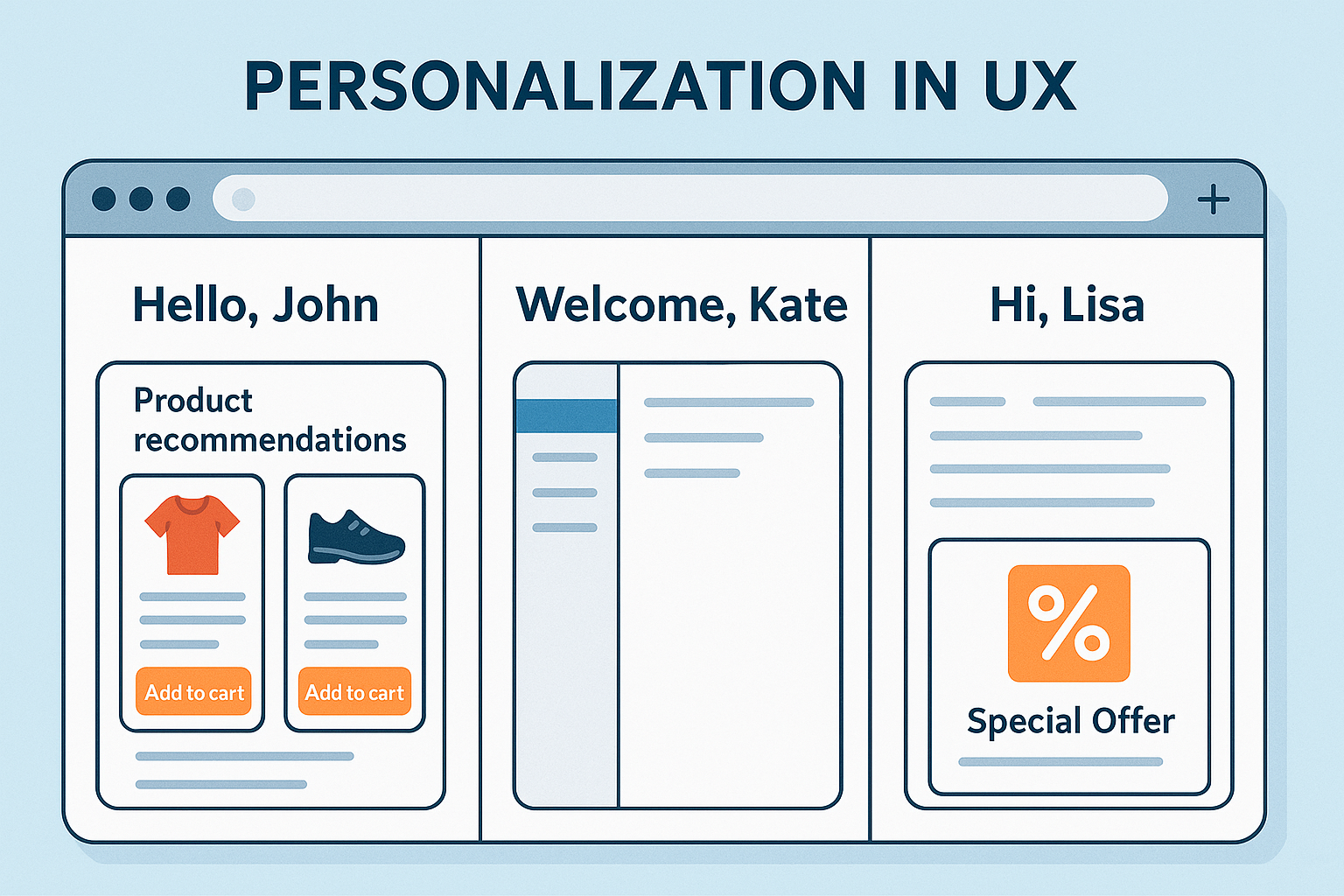


Have you ever noticed how some websites just get you? The moment you land on the page, they seem to know exactly what you’re looking for—showing the right products, suggesting the perfect content, and making your entire experience feel effortless. That’s not luck—it’s AI-driven personalization and user experience optimization at work.
In today’s competitive digital world, a one-size-fits-all approach simply doesn’t cut it. Your customers expect tailored digital experiences that feel genuine and relevant to their needs. UX personalization strategies bridge that gap by turning ordinary visits into meaningful connections that drive engagement and conversion rate improvement.
Why does this matter? Because personalization isn’t just about design—it’s about understanding users through customer journey mapping, behavioral targeting UX, and data-driven UX design. When done right, it builds trust, boosts loyalty, and encourages action. A personalized user interface can be the difference between a visitor who bounces and one who buys.
You’ll learn how to apply personalization best practices, UX customization techniques, and customer engagement tactics that strengthen your brand’s bottom line. From UX personalization examples and personalization in ecommerce to UX personalization tools, you’ll discover how to turn data into experiences that convert.
The Evolution of Personalization in UX Design
Early digital experiences were static, but as personalization design trends evolved, adaptive interface design emerged—allowing brands to tailor every touchpoint. Today, website personalization software and personalization automation enable real-time personalization that adapts dynamically to each user.
At its core, customer experience personalization focuses on predictive user experience and personalized marketing design. Machine learning in UX and adaptive UX systems now help create intelligent, context-aware interactions.
This shift has transformed personalization into a vital UX personalization framework, balancing data ethics with empathy. Understanding this evolution helps brands apply personalization UX testing and personalization platform comparison effectively.
Key Elements That Make UX Personalization Work
The foundation of effective personalization lies in user data analytics UX. It supports user segmentation strategies and informs dynamic content customization. Personalized product recommendations, personalized landing pages, and personalization in mobile apps enhance relevance and boost conversion optimization UX.
When these components work together, personalization metrics reveal insights that guide customer retention personalization. This creates seamless omnichannel experiences rooted in customer-centric design, helping users feel valued across every interaction.
For instance, Spotify uses AI-driven personalization and UX personalization tools to curate playlists like “Discover Weekly,” while Amazon applies personalized marketing design and predictive user experience to enhance shopping journeys. These UX personalization examples show how technology and empathy unite to create lasting loyalty.
If you’re exploring how strong design connects to conversions, our guide on UI design and landing page best practices is a perfect complement.
The Benefits of Personalization in UX Design
Ecommerce personalization and adaptive interface design lead to deeper engagement and longer visits. Businesses using data-driven UX design and AI-driven personalization often see measurable conversion rate improvement.
Key Benefits:
- Higher Engagement: Dynamic content customization and real-time personalization keep users exploring.
- Stronger Retention: Customer retention personalization strengthens loyalty and lifetime value.
- Smarter Decisions: Personalization metrics and UX personalization case studies reveal valuable insights for optimization.
Brands like Netflix and Sephora exemplify personalization in ecommerce by blending UX customization techniques with personalization best practices, offering users experiences that feel both personal and intuitive.
To expand your approach to audience understanding, see media planning and brand awareness strategies—a key step to aligning UX personalization with broader marketing efforts.
The Challenges of Implementing UX Personalization
Even though personalization in UX offers huge rewards, it comes with challenges. Implementing website personalization software or adaptive UX systems requires thoughtful planning, ethical consideration, and continual testing.
Common Challenges:
- Data Privacy Concerns: Managing user data analytics UX responsibly is crucial.
- Overpersonalization Risks: Excessive targeting in behavioral targeting UX can feel invasive.
- Complex Implementation: Integrating personalization automation into legacy systems can be resource-heavy.
- Scalability Issues: Ensuring consistency in real-time personalization across devices takes work.
Solutions:
- Use ethical, consent-based data for personalization.
- Start small with UX personalization strategies like personalized landing pages.
- Rely on personalization UX testing and analytics to refine continuously.
For a more data-structured approach, try our free media planning templates and worksheets—helpful for building scalable, trackable personalization campaigns.
How to Implement Personalization in Your UX Strategy
Implementing personalization doesn’t require massive resources—just clarity, empathy, and experimentation. Follow this roadmap to begin:
- Define Your Goals – Determine whether your focus is conversion rate improvement, engagement, or retention.
- Understand Your Audience – Use customer journey mapping and user segmentation strategies to identify patterns.
- Choose the Right Tools – Evaluate systems using personalization platform comparison and UX personalization tools.
- Design Personalized Experiences – Apply UX customization techniques like dynamic content customization and personalized product recommendations.
- Test and Refine – Conduct ongoing personalization UX testing and track personalization metrics to improve continuously.
Software like Google Optimize, Mixpanel, and HubSpot supports data-driven UX design and personalization automation to streamline this process.
If you’re comparing personalization or analytics tools, check out our advanced media planning tools comparison to make data-informed decisions.
The Future of UX Personalization: What’s Next for Tailored Experiences
The future of personalization goes beyond demographics and behaviors—it’s about context, emotion, and anticipation. With machine learning in UX, brands can predict needs before users articulate them.
Emerging Trends:
- Predictive User Experience: Systems anticipate intent and adapt in real time.
- Emotionally Aware Design: Advances in adaptive interface design and emotional AI create human-like responsiveness.
- Privacy-First Personalization: Ethical data-driven UX design prioritizes consent and transparency.
- Cross-Platform Consistency: Seamless interactions across devices through adaptive UX systems.
As personalization design trends evolve, customer-centric design will remain the foundation. The most successful brands will use personalization best practices to balance intelligence and empathy, maintaining trust while delivering powerful, human-centered experiences.
Wrapping Up: Making Personalization Work for You
Personalization in ecommerce and across industries proves that relevance drives results. With UX personalization strategies, data-driven UX design, and personalization automation, brands can deliver smarter, more intuitive experiences that convert.
Even small enhancements—like personalized landing pages, personalized product recommendations, or improved user segmentation strategies—can dramatically influence engagement and loyalty.
Keep measuring success through personalization metrics and stay updated on personalization design trends and UX personalization case studies to refine continuously.
Personalization isn’t just a marketing tactic—it’s a long-term commitment to understanding people. When powered by empathy, technology, and innovation, it transforms user interactions into meaningful relationships.
Final Thoughts: Keep Personalization at the Heart of UX
UX personalization is more than a technique—it’s a mindset. By applying personalization best practices, UX customization techniques, and customer-centric design, you can craft experiences that are thoughtful, adaptive, and deeply engaging.
Start exploring new UX personalization examples, collaborate on personalization platform comparison research, and experiment with UX personalization tools in your workflow.
Remember, every step toward real-time personalization brings your audience closer to the experiences they truly value.
Thanks for joining this exploration of UX personalization strategies—keep experimenting, stay curious, and design with empathy at the core of every interaction.
Contact Us
