On-Page SEO Checklist for 2025
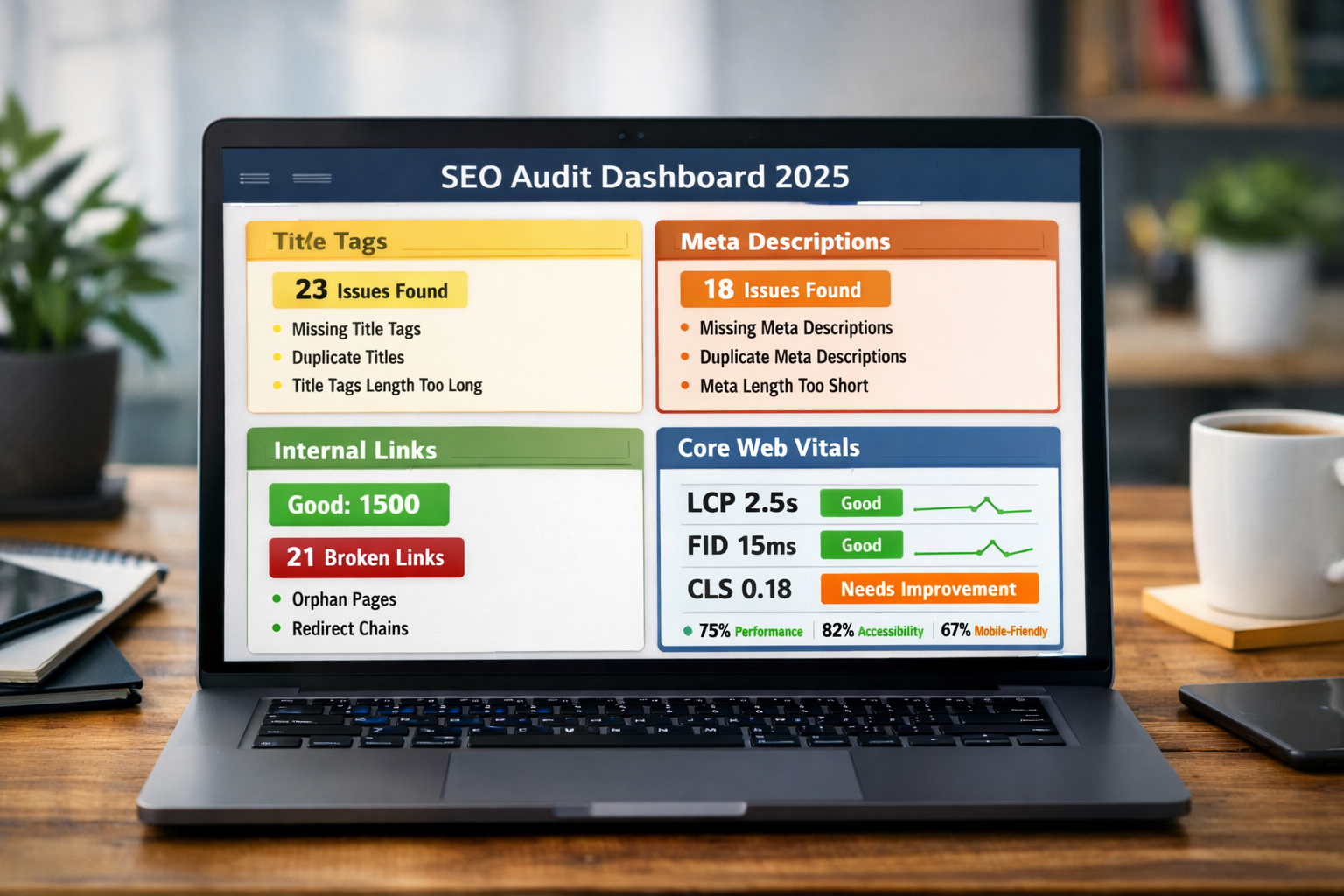


The 2025 On-Page SEO Strategy That Actually Moves Rankings
Search engine optimization continues to evolve, but one principle remains constant: strong on-page SEO is the foundation of sustainable rankings. As search engines become more sophisticated in 2025, algorithms prioritize search intent alignment, semantic relevance, structured content, and page experience.
Many businesses invest heavily in backlinks and paid advertising while overlooking onsite fundamentals. However, even the strongest backlink profile cannot compensate for poor structure, unclear hierarchy, or weak onsite optimization in SEO.
If your pages are not optimized properly, search engines struggle to interpret context, and users struggle to find value. That leads to lower rankings and weaker engagement metrics.
In this comprehensive guide, you will learn:
- A complete on page SEO checklist for 2025
- Best practices for on page SEO that align with current algorithm priorities
- Advanced on page SEO techniques
- On page and off page SEO factors and how they interact
- Homepage SEO best practices
- How to build a long-term onsite SEO strategy
Let us break down the essential steps that actually move rankings in 2025.
Why On-Page SEO Still Matters in 2025
Search engines have shifted from keyword matching to contextual understanding. Artificial intelligence now evaluates relationships between concepts, content depth, semantic signals, and user engagement behavior.
Despite these advancements, onsite SEO best practices remain essential because they signal:
- Content relevance
- Page hierarchy clarity
- Technical performance
- User experience quality
- Authority and trustworthiness
Google’s AI-driven systems analyze semantic relationships, structured formatting, dwell time, and engagement metrics. Well-optimized pages consistently outperform poorly structured pages, even when backlink profiles are similar.
In 2025, on-page SEO is about clarity, intent alignment, semantic depth, and performance optimization.
Complete On Page SEO Checklist for 2025 Success
This comprehensive SEO onsite checklist covers both foundational and advanced on page SEO elements.
Step 1: Optimize Title Tags and Meta Descriptions
Purpose: Improve click-through rate and keyword alignment.
Your title tag remains one of the most influential on-page SEO techniques. Include your primary keyword naturally near the beginning of the title when appropriate.
Best practices for on page SEO titles:
- Keep titles under 60 characters
- Write benefit-driven headlines
- Avoid keyword stuffing
- Include brand names strategically
Meta descriptions should:
- Stay under 160 characters
- Clearly summarize value
- Encourage clicks with persuasive language
While meta descriptions do not directly impact rankings, they influence click-through rate, which affects performance signals.
Step 2: Use Structured H1, H2, and H3 Hierarchy
Purpose: Improve crawlability and readability.
Your page structure should include:
- One H1 tag containing the primary topic
- Multiple H2 tags defining main sections
- H3 and H4 tags supporting subsections
Proper hierarchy strengthens onsite optimization in SEO by helping search engines understand content relationships.
Clear formatting also improves user experience and reduces bounce rates.
Step 3: Align Content With Search Intent
Purpose: Match user expectations precisely.
Search intent is the most critical ranking factor in modern on-page SEO.
Ask:
- Is the search informational?
- Is it transactional?
- Is it navigational?
- Is it commercial investigation?
Content must fully satisfy the searcher’s goal.
For example:
- Informational intent requires in-depth explanations.
- Transactional intent requires clear calls to action and product details.
Google rewards pages that solve problems completely.
Step 4: Implement Semantic Keyword Optimization
Purpose: Build topical authority.
Advanced on page SEO goes beyond repeating a single keyword. Instead, it incorporates related phrases and contextual terminology naturally.
For example, when optimizing for on-page SEO, include related concepts such as:
- Technical SEO
- Content structure
- Internal linking
- User experience
- Core Web Vitals
- Search visibility
Semantic richness strengthens topical depth and supports long-term rankings.
Step 5: Improve Internal Linking Strategy
Purpose: Distribute authority and enhance navigation.
Internal links help search engines:
- Crawl deeper into your website
- Identify topic clusters
- Understand content relationships
Use descriptive anchor text rather than generic phrases.
For example, explore campaign case studies in the Our Work section or review available Services to understand structured digital strategies.
Strong internal linking remains one of the most overlooked on page SEO techniques.
Step 6: Optimize Page Speed and Core Web Vitals
Purpose: Improve user experience and performance metrics.
Core Web Vitals remain essential ranking factors in 2025:
- Largest Contentful Paint
- Interaction responsiveness
- Layout stability
To optimize:
- Compress images
- Minify CSS and JavaScript
- Use caching solutions
- Optimize hosting performance
Page speed improvements strengthen both user engagement and SEO performance.
Step 7: Add Structured Data Markup
Purpose: Enhance search visibility.
Structured data allows search engines to generate rich results, including:
- FAQ sections
- Reviews
- Business information
- Product pricing
Schema markup improves visibility and click-through rates without altering visible content.
Advanced on page SEO strategies frequently include structured data implementation.
Step 8: Optimize Images and Media
Purpose: Improve accessibility and reduce load time.
Best practices include:
- Descriptive file names
- Keyword-relevant alt text
- Compressed image sizes
- Lazy loading for large media
Image optimization supports both accessibility and technical SEO performance.
Step 9: Ensure Mobile-First Optimization
Purpose: Meet modern indexing standards.
Google uses mobile-first indexing. Your pages must:
- Be fully responsive
- Load quickly on mobile devices
- Avoid intrusive pop-ups
- Maintain readable font sizes
Mobile usability is a non-negotiable part of onsite SEO best practices.
Step 10: Improve Content Depth and Expertise
Purpose: Strengthen E-E-A-T signals.
High-ranking content typically:
- Covers topics comprehensively
- Provides actionable insights
- Demonstrates subject expertise
- References relevant examples
Experience, Expertise, Authoritativeness, and Trustworthiness are key quality indicators.
Well-structured long-form content tends to outperform thin pages.
Homepage SEO Best Practices
Your homepage plays a unique role in your onsite SEO strategy.
Homepage SEO best practices include:
- Clear H1 that defines your primary service
- Strong internal linking to priority pages
- Optimized title and meta description
- Fast loading speed
- Clear calls to action
Visitors often land on the homepage first. Clarity and structure are critical.
You can review structured digital campaigns in the Clients section to understand strategic positioning examples.
On Page and Off Page SEO Factors
Although this guide focuses on on-page SEO, it is important to understand how on page and off page SEO factors interact.
On-Page SEO Includes:
- Content optimization
- Internal linking
- Technical structure
- Page speed
- Schema markup
Off-Page SEO Includes:
- Backlinks
- Brand mentions
- Social signals
- External authority
Strong onsite optimization amplifies the impact of off-page signals. Without structured pages, backlinks provide limited benefit.
Real-World Application of On-Page SEO Improvements
Use Case 1: Local Service Website Optimization
A service-based website improved:
- Title tag alignment
- Structured FAQ sections
- Internal linking architecture
- Core Web Vitals
Organic traffic increased significantly due to improved intent alignment and performance.
Use Case 2: Content Blog Refresh
An informational blog updated older articles by:
- Adding semantic keyword variations
- Improving heading structure
- Updating meta descriptions
- Expanding content depth
Search engines rewarded the enhanced clarity and topical authority.
For broader digital integration strategies, explore this guide on TikTok strategy alignment:
TikTok Marketing for Brands Guide
Cross-channel alignment strengthens visibility.
Common On-Page SEO Mistakes to Avoid in 2025
Avoid these common errors:
Keyword Stuffing
Over-optimization harms readability and trust.
Ignoring Search Intent
Pages that fail to satisfy user queries struggle to rank.
Slow Page Speed
Unoptimized media reduces engagement.
Missing Internal Links
Orphaned pages weaken authority flow.
Duplicate Content
Repeated or thin content reduces credibility.
A disciplined SEO onsite checklist prevents these issues.
Building a Long-Term Onsite SEO Strategy
An effective onsite SEO strategy requires consistency.
Recommended workflow:
- Conduct quarterly content audits
- Refresh outdated pages
- Monitor Core Web Vitals
- Expand topic clusters
- Optimize new pages before publishing
- Review analytics for performance trends
On-page SEO is not a one-time task. It requires ongoing refinement.
Final Thoughts on On-Page SEO in 2025
In 2025, on-page SEO is about delivering structured, fast, semantically rich, and intent-driven content.
By following this on page SEO checklist, you ensure your website:
- Aligns with evolving ranking factors
- Provides exceptional user experience
- Demonstrates authority
- Maintains competitive visibility
Search algorithms will continue to evolve, but strong onsite optimization in SEO remains the backbone of sustainable organic growth.
Frequently Asked Questions About On-Page SEO
What is on-page SEO?
On-page SEO refers to optimizing individual web pages to improve rankings and user experience.
Is on-page SEO still important in 2025?
Yes. Search engines rely heavily on structured, optimized content to determine relevance and authority.
How often should I update on-page SEO elements?
Review key pages every six to twelve months to maintain alignment with search trends.
Does page speed affect on-page SEO?
Yes. Core Web Vitals and loading speed directly influence rankings and engagement.
What is the most important on-page SEO factor?
Search intent alignment combined with structured content hierarchy remains one of the most critical factors.
Strong on-page SEO provides clarity to search engines and value to users. When implemented strategically, it becomes the foundation for long-term organic success.
Contact Us
