Content Pillars Explained: How to Build a Scalable Content Strategy


Why Content Pillars Matter for Long-Term Growth
If your content feels scattered, inconsistent, or difficult to scale, the issue is rarely creativity. It is usually structure. Many brands publish blogs, social posts, and videos without a clear framework tying everything together. Over time, this makes results harder to measure and momentum harder to maintain. That is exactly why content pillars matter.
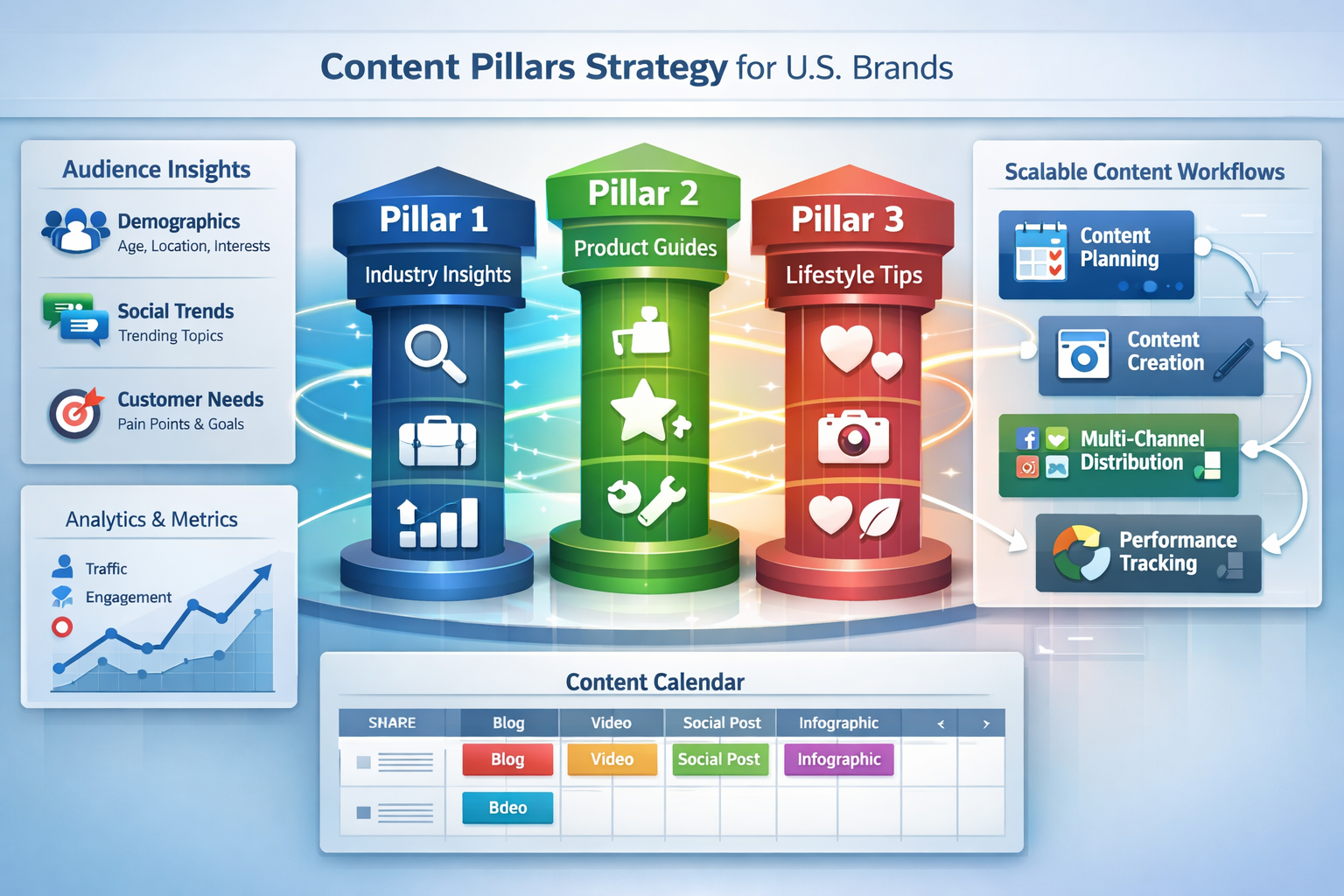
Content pillars give your marketing direction. Instead of reacting week to week or chasing trends, you anchor your content to a defined set of themes that reflect your audience’s needs and your business goals. This structure simplifies planning, strengthens SEO, and creates consistency across channels as teams and content volume grow.
In this guide, we will explain content pillars in plain language and show how to build a scalable strategy around them. You will learn what content pillars are, how many you need, how to apply them to social media, and how they support long-term performance.
By the end, you will have:
- A clear answer to what does content pillar mean
- Practical examples of content pillars
- A framework you can apply across blogs, SEO, and social media
What Content Pillars Are (And What They Are Not)
Content pillars are the core themes your brand consistently creates content around. They sit at the intersection of audience needs, business objectives, and search demand. Everything you publish should map back to at least one pillar.
Think of content pillars as strategic categories, not individual posts. A single pillar can support dozens or even hundreds of content assets over time.
What content pillars are:
- Strategic themes aligned with goals
- Broad enough to scale, focused enough to guide decisions
- The foundation of your content calendar
What content pillars are not:
- Random blog ideas
- One-off campaigns
- Short-term social trends
Understanding this distinction is critical. When teams confuse pillars with topics, content becomes reactive and fragmented. Agencies like Express Media use content pillars to align SEO, paid media, and creative execution so strategy stays consistent even as tactics evolve.
Content Strategy Pillars vs Individual Content Ideas
A common misconception is treating every good idea as a pillar. In reality, pillars support ideas, not the other way around.
For example:
- Content pillar: Educational marketing insights
- Pillar content examples: SEO guides, analytics explainers, algorithm updates
This hierarchy is what makes pillar strategies scalable. Instead of asking “What should we post today?”, teams ask “Which pillar are we supporting, and how?”
That single shift dramatically improves focus and output quality.
How to Build Content Pillars Step by Step
Step One: Clarify Business Objectives
Before defining pillars, identify what content needs to achieve. Common objectives include lead generation, brand authority, pipeline support, or customer education.
Without clear objectives, content pillars become creative exercises rather than growth tools.
Step Two: Understand Audience Pain Points
Strong pillars are rooted in audience reality, not internal assumptions. Document who your audience is, what challenges they face, and what questions they ask throughout the buying journey.
Use insights from sales conversations, support tickets, analytics, and search behavior to validate these needs.
Step Three: Identify Core Pillar Themes
Choose three to five themes that consistently support both the audience and the business. This answers the question of how many content pillars should you have. Fewer than three limits flexibility, while more than five usually dilutes focus.
Each pillar should be:
- Clearly defined
- Easy to explain
- Capable of generating ongoing ideas
These become your core content pillars examples.
Step Four: Validate With Keyword and Topic Research
To ensure long-term value, validate each pillar with search demand. Map keywords and subtopics to confirm there is consistent interest. This step strengthens SEO and helps your strategy compound over time.
Pillars supported by demand become assets. Pillars without it become noise.
Step Five: Document and Share the Pillars
Once defined, document each pillar clearly. Include its purpose, audience focus, and example topics. This documentation keeps content aligned as teams grow or new channels are added.
Content Pillars for Social Media
Content pillars are especially powerful for social media, where consistency matters more than volume. Content pillars for social media help teams maintain a clear voice and balanced feed.
For example, social media pillars might include:
- Education and tips
- Brand values and culture
- Product or service insights
- Customer stories
Each post should clearly support one pillar. This makes planning easier, reduces creative fatigue, and improves audience recognition over time.
A single content pillar example can support reels, carousels, short videos, and static posts without feeling repetitive.
Turning Content Pillars Into Scalable Content
Once your pillars are in place, scalability becomes the biggest advantage. Each pillar turns into a content engine instead of a single output.
One pillar can support:
- Long-form blog content
- Short-form social posts
- Video and live content
- Email newsletters
- Paid media creative
This approach makes repurposing efficient. A single pillar-based article can generate multiple assets without losing focus or quality. Over time, this consistency builds authority and trust.
Where Content Pillars Fit Into SEO and Performance
From an SEO perspective, content pillars support topical authority. Search engines reward brands that cover subjects deeply and consistently. Pillars help organize content into clusters that signal relevance and expertise.
From a performance standpoint, pillars improve measurement. When content is grouped by theme, it becomes easier to evaluate what drives traffic, engagement, and conversions. Optimization becomes intentional instead of reactive.
This is why mature teams integrate content pillars with analytics and reporting from the start.
Real-World Use Cases for Content Pillars
B2B brands use content pillars to align marketing and sales around shared messaging, resulting in better lead quality and shorter sales cycles.
Agencies use pillars to onboard clients and show how SEO, paid media, and creative efforts connect. Reviewing real executions, such as those featured in Express Media’s portfolio of work, helps stakeholders understand how strategy turns into results.
Even small teams benefit. Startups use content pillars to stay focused, ensuring limited resources are invested where they matter most.
Supporting Pillars With Execution and Services
Once pillars are defined, execution becomes faster and more consistent. Content calendars, briefs, and campaigns all reference the same foundation.
Integrated services across content, SEO, and paid media, like those outlined in Express Media’s marketing services, help ensure pillars are reinforced across channels instead of siloed.
Video is also becoming a critical extension of many pillars. Resources such as this guide on using video marketing effectively show how pillar-based strategies translate naturally into video formats.
Best Practices and Common Mistakes
To get the most from content pillars:
- Limit pillars to three to five
- Tie every pillar to audience value and business goals
- Avoid trend-driven or short-lived themes
- Review pillars quarterly or annually
- Document definitions clearly
The most common mistake is skipping documentation. Without clarity, pillars lose power as teams grow.
Build Once, Scale Confidently
Content pillars turn content from a guessing game into a system. They provide structure without limiting creativity and make it easier to scale results over time. When every piece of content reinforces a defined pillar, momentum compounds instead of fragmenting.
By defining the right themes, validating them with data, and applying them consistently across channels, you build a content engine designed for long-term growth. Whether working in-house or with partners like Express Media, content pillars ensure your strategy stays intentional, scalable, and effective.
The next step is simple: define your pillars, document them clearly, and let consistency do the heavy lifting.
Frequently Asked Questions About Content Pillars
What are content pillars?
They are the core themes a brand consistently creates content around to support audience needs and business goals.
How many content pillars should you have?
Most brands perform best with three to five pillars.
Are content pillars only for blogs?
No. They guide blogs, social media, video, email, and paid campaigns.
How often should content pillars be updated?
Review them quarterly or annually to stay aligned with goals and audience behavior.
Do content pillars help SEO?
Yes. They support topical authority, internal linking, and long-term search visibility.
Contact Us
