The Best Content Creation Tools for Faster, Higher-Quality Production
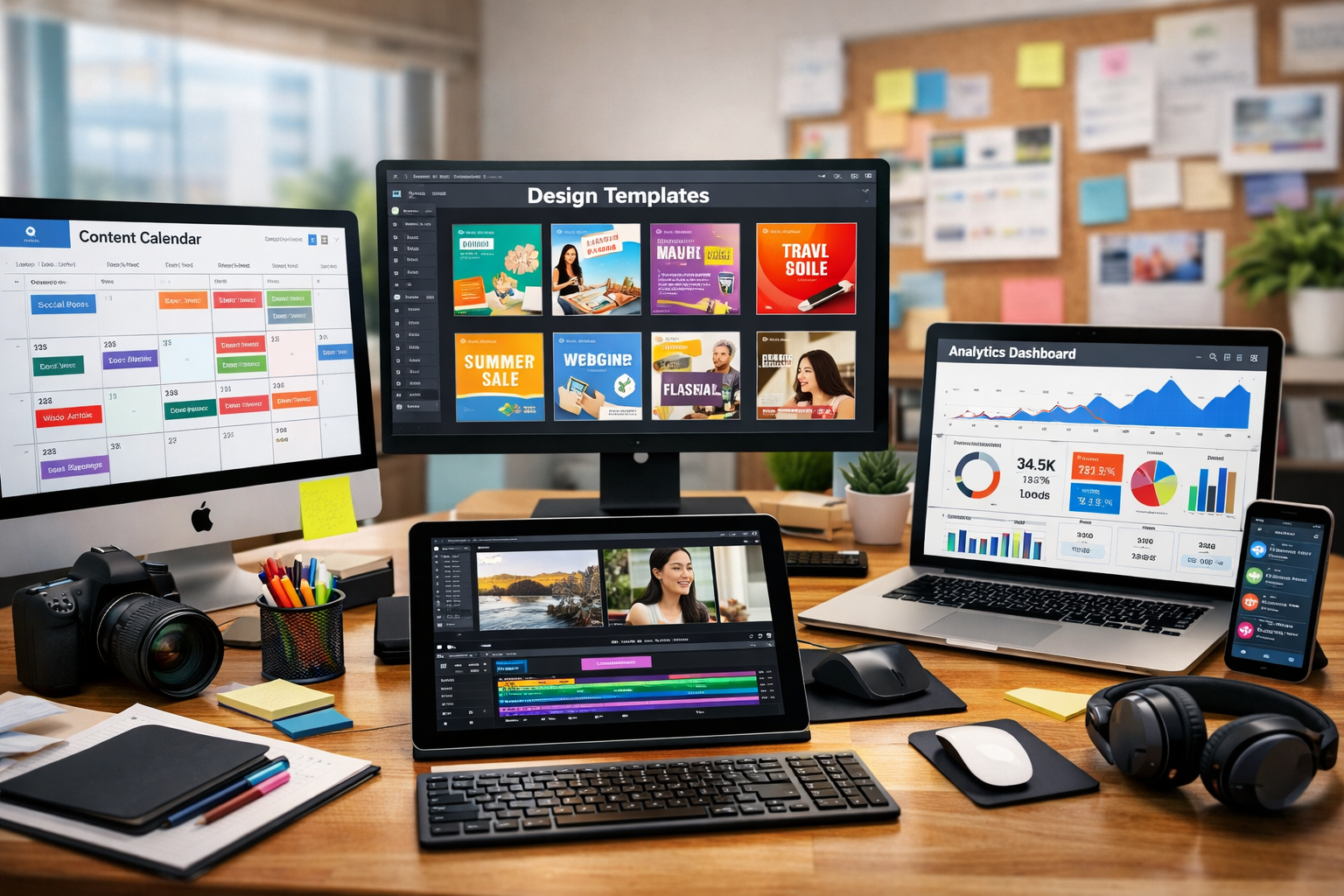


Content Creation Tools That Power Faster, Smarter Marketing
Creating consistent, high-quality content is one of the biggest challenges facing modern marketing teams. Blogs, videos, ads, emails, and social media all compete for attention, while timelines shrink and expectations rise. Without the right systems in place, production becomes fragmented, quality slips, and teams burn out.
This is where the right content creation tool becomes a competitive advantage. Instead of juggling disconnected apps and manual workflows, today’s best tools streamline ideation, production, collaboration, and distribution. They help teams move faster without sacrificing quality and allow marketers to focus on strategy instead of repetitive tasks.
In this guide, we break down the best content creation tools for U.S. businesses, explain what each does best, and show how they fit into a modern content creation system. Whether you are a lean in-house team or scaling content across channels, these tools can dramatically improve output, consistency, and results.
Why Content Creation Tools Matter for Modern Marketing Teams
A content creation tool is not just software. It is the backbone of an efficient marketing operation. The right tools remove friction at every stage of production, from planning and drafting to design, publishing, and performance tracking.
Modern content creation tools for digital marketing help teams:
- Centralize workflows and collaboration
- Reduce repetitive work with templates and automation
- Maintain consistent brand voice and visuals
- Increase production speed without lowering standards
For businesses competing in crowded digital markets, speed and quality are inseparable. The brands that win are not creating more content at random. They are creating better content faster with a system designed for scale.
The Best Content Creation Tools for Faster, Higher-Quality Production
Notion: Centralized Content Planning and Collaboration
Notion is a flexible workspace that brings planning, documentation, and collaboration into one place. Many teams use it as the foundation of their content creation management software.
Why it works:
- Replaces scattered documents and spreadsheets
- Keeps editorial calendars, briefs, and drafts aligned
- Adapts easily to different workflows
Best use case:
Content calendars, campaign planning, and collaborative drafting across teams.
Canva: Fast Visual Content Creation Without Bottlenecks
Canva is one of the most widely used digital content creation tools for visual assets. It allows marketers to create professional designs without relying on designers for every request.
Why it works:
- Drag-and-drop design with brand kits
- Thousands of templates for fast production
- Consistent visuals across channels
Best use case:
Social media graphics, ads, presentations, and other visual content creation needs.
Adobe Creative Cloud: Professional-Grade Creative Production
Adobe Creative Cloud remains the standard for advanced design and video work. Tools like Photoshop, Illustrator, Premiere Pro, and After Effects support high-end creative demands.
Why it works:
- Full creative control and precision
- Industry-standard output quality
- Scales well for large campaigns
Best use case:
Premium video, advanced design, and high-impact creative campaigns.
Grammarly: Clear, Consistent Written Content at Scale
Grammarly improves clarity, tone, and correctness across written content. It integrates directly into browsers, documents, and CMS platforms.
Why it works:
- Reduces editing time
- Maintains consistency across teams
- Supports brand voice and professionalism
Best use case:
Blogs, landing pages, emails, and long-form content.
ChatGPT: AI-Assisted Content Ideation and Drafting
ChatGPT supports ideation, outlining, drafting, and repurposing. It helps teams move faster during early production stages.
Why it works:
- Eliminates blank-page friction
- Accelerates first drafts and variations
- Supports repurposing at scale
Best use case:
Content ideation, draft creation, and adaptation of existing assets.
Hootsuite: Social Content Creation and Distribution
Hootsuite combines scheduling, publishing, and analytics in one platform, making it a practical tool for social-focused teams.
Why it works:
- Centralized scheduling across platforms
- Performance insights tied to content
- Efficient multi-channel management
Best use case:
Social media content creation, scheduling, and optimization.
HubSpot: Content Creation Connected to Lead Generation
HubSpot connects content creation with CRM, email, analytics, and lead tracking. It allows teams to measure impact beyond traffic.
Why it works:
- Content tied directly to leads and revenue
- Integrated inbound marketing workflows
- Strong analytics and attribution
Best use case:
Inbound marketing and lead-driven content strategies.
How Businesses Use Content Creation Tools in Practice
The most effective teams do not rely on a single tool. They build a content creation system where tools work together.
A common workflow might look like this:
- Plan and manage content in Notion
- Draft and ideate with AI assistance
- Refine writing with Grammarly
- Design visuals in Canva or Adobe
- Publish and distribute through HubSpot or Hootsuite
This integrated approach often reduces production time by 30 to 50 percent while improving consistency. Agencies and in-house teams that rely on video-heavy campaigns pair professional creative tools with collaboration platforms to maintain quality and timelines.
The key is intentional selection, not tool overload.
Best Practices for Choosing the Right Content Creation Tool
Selecting the right tool requires strategy, not trend-chasing.
Follow these best practices:
- Match tools to your actual workflows
- Prioritize tools that integrate well
- Balance speed with quality control
- Invest in onboarding and training
- Keep your stack lean and purposeful
The best tools for content marketers are the ones that support how your team works today and where you plan to scale tomorrow.
Turning Content Creation Tools Into Growth Engines
The best tools do more than improve efficiency. They make growth predictable. When planning, creation, distribution, and measurement are aligned, content becomes a reliable driver of traffic, leads, and revenue.
Agencies like Express Media help brands select and implement the right content creation tools within performance-driven strategies. By combining technology with execution, businesses can produce higher-quality content faster and tie every asset to measurable outcomes.
If your content feels slow, inconsistent, or disconnected from results, the issue may not be creativity. It may be the system behind it.
Final Thoughts on Choosing the Right Content Creation Tool
A content creation tool is not a nice-to-have. It is a core part of modern digital marketing. The right tools empower teams to move faster, collaborate better, and maintain quality at scale.
When chosen strategically and used intentionally, content creation tools transform content from a reactive task into a scalable growth engine.
Frequently Asked Questions About Content Creation Tools
What is a content creation tool?
It is software that helps plan, create, edit, design, or distribute digital content more efficiently.
Are AI content creation tools replacing human creators?
No. AI accelerates ideation and drafting, but human strategy and oversight remain essential.
What are the best tools for content creators on small teams?
Canva, Notion, and Grammarly offer strong value due to ease of use and affordability.
How many content creation tools should a team use?
A focused stack of three to six integrated tools usually performs better than a bloated toolkit.
Do content creation tools improve ROI?
Yes. They reduce production time, improve consistency, and help teams publish more effective content at lower cost.
Contact Us
