How to Build a Content Calendar That Keeps You Consistent
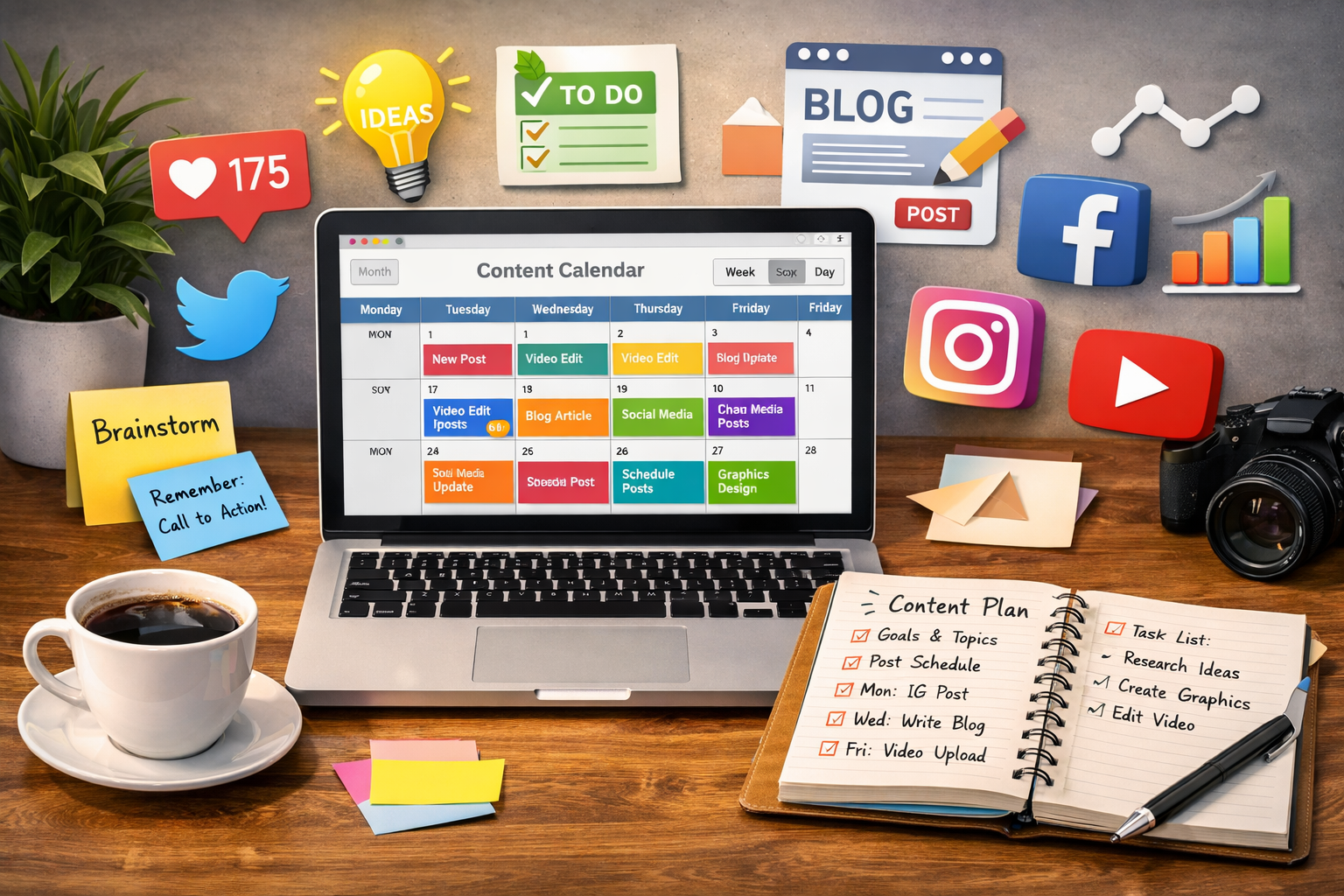


Plan Once, Publish Consistently: The Power of a Content Calendar
Consistency is one of the biggest challenges in content marketing. You start strong, publishing regularly, testing ideas, and building momentum. Then daily responsibilities, shifting priorities, and unexpected deadlines take over. Weeks pass without posting anything meaningful, and your strategy begins to feel scattered.
This is not a motivation problem. It is a planning problem.
A content calendar gives you structure when creativity runs dry and clarity when everything feels urgent. Instead of asking what you should post today, you already know what is going live, where it is being published, and how it supports your larger goals. That preparation reduces stress and helps your marketing efforts move forward even during busy periods.
In this guide, you will learn how to create a content calendar that actually works. We will cover what a content calendar is, how to create one step by step, and how businesses across the United States use editorial planning to stay visible, relevant, and organized. You will also see examples, ideas, and tools that make content planning easier to maintain over time.
If you are ready to stop scrambling and start publishing with confidence, this guide will walk you through how to build a content calendar that keeps you consistent.
What a Content Calendar Is and Why It Matters
A content calendar is a centralized planning system that outlines what content you will publish, when it will be published, and where it will be distributed. It can include blog posts, social media updates, email campaigns, videos, landing pages, and even paid advertising content. Anything tied to your content strategy can live inside a content calendar.
Sometimes the term content marketing editorial calendar is used interchangeably with content calendar. While there are slight differences, both serve the same core purpose: bringing structure and intention to your content efforts.
The value of a content calendar comes down to one word: consistency.
When your audience sees regular, intentional content, they begin to trust your brand. Trust leads to engagement, and engagement leads to conversions. Without a calendar, publishing becomes reactive. You post when inspiration strikes or when something feels urgent, which results in gaps, mixed messaging, and missed opportunities.
A well-organized content calendar helps you:
- Maintain a steady and realistic publishing rhythm
- Align content with campaigns, launches, and business goals
- Reduce last-minute stress and rushed ideas
- Improve collaboration across teams and stakeholders
- Track what has been published and what is coming next
Many marketers worry that planning content in advance will limit creativity. In reality, the opposite is true. When structure is handled ahead of time, you free up mental space to focus on storytelling, quality, and performance instead of scrambling for ideas at the last minute.
Editorial Calendar vs Content Calendar: What Is the Difference?
The discussion around editorial calendar vs content calendar often causes confusion, especially for teams just getting started.
An editorial calendar traditionally focuses on long-form content such as blogs, articles, and thought leadership. It emphasizes topics, publishing dates, and authorship.
A content calendar is broader. It includes all content formats across channels, such as social media posts, email campaigns, videos, and downloadable resources, in addition to blog content.
In practice, many businesses combine both into a single editorial content calendar that provides a complete view of their content ecosystem. The name matters less than the function. What matters is having a system that shows what is being published, when it is going live, and how it connects to business objectives.
How to Create a Content Calendar Step by Step
Building a content calendar does not require complex software or a large team. It requires clarity, realism, and a repeatable process.
Step 1: Define Clear Content Goals
Before planning a single post, you need to understand what your content is meant to achieve. Goals prevent you from publishing content simply to stay active.
Common goals include increasing brand awareness, driving website traffic, generating leads, supporting service launches, or nurturing existing customers.
Each goal should connect to a measurable outcome. For example, blog content planning may focus on organic traffic and engagement, while a social media content calendar may track reach and interactions. When goals are clear, every piece of content earns its place on the calendar.
Step 2: Identify Your Target Audience
Your content calendar should be built around your audience rather than internal assumptions. Consider who you are trying to reach, what problems they want solved, and where they consume content.
Audience insights influence content formats, tone, and channels. A B2B audience may prioritize LinkedIn and in-depth blogs, while consumer brands may see stronger results from Instagram, short-form video, and newsletters.
Step 3: Choose Core Content Channels
Not every platform needs equal attention. Choose channels where your audience is active and where your team can realistically maintain consistency.
Typical channels include:
- Blog content for SEO and authority
- Social media platforms for visibility and engagement
- Email newsletters for nurturing and retention
It is better to post consistently on a few channels than inconsistently across many. Your content calendar should reflect priorities, not pressure.
Step 4: Decide on Publishing Frequency
Consistency does not mean posting daily. It means publishing on a schedule you can sustain.
Decide how often you will publish on each channel. For example, one blog per week, three social posts per week, and one newsletter per month. This approach is especially effective when building a content calendar for small business teams with limited time.
Overcommitting leads to burnout. A realistic schedule supports long-term growth.
Step 5: Develop Content Themes and Pillars
Content themes help prevent idea fatigue. These are recurring categories aligned with your audience’s needs, such as education, industry insights, behind-the-scenes content, or promotions.
Themes bring balance to your calendar and ensure your messaging does not lean too heavily toward sales-focused content.
Step 6: Brainstorm Content Calendar Ideas
With themes defined, generating content calendar ideas becomes easier. Each theme can support multiple formats across platforms.
For example, one blog post can be repurposed into social snippets, a newsletter section, and short videos. Planning this in advance maximizes output without increasing workload.
Step 7: Assign Dates, Deadlines, and Ownership
Once ideas are mapped out, assign publishing dates and work backward to establish deadlines for drafting, editing, and approvals.
Clear ownership ensures accountability. Every piece of content should have a responsible person attached to it.
Build in buffer time to accommodate changes and approvals. A flexible calendar supports momentum without rigidity.
Using a Content Calendar Across Channels
A strong content calendar adapts to different formats while maintaining a unified strategy.
Blog Content Planning
Blog content planning benefits significantly from a calendar. Planning topics ahead of time allows you to align articles with keyword strategies, campaigns, and internal linking opportunities.
It also helps maintain consistency, which improves both SEO performance and audience trust.
Social Media Content Calendar
A social media content calendar prevents last-minute posting and inconsistent messaging. Planning posts in advance allows you to balance promotional, educational, and engaging content while maintaining brand voice.
This approach also makes it easier to batch and schedule posts efficiently.
Newsletter Content Calendar
A newsletter content calendar ensures emails remain intentional instead of sporadic. Planning topics ahead of time allows newsletters to support blog content, campaigns, and customer journeys.
Consistency in email builds familiarity and trust over time.
Content Calendar for Small Business
For small businesses, a content calendar reduces decision fatigue and protects consistency. Many owners batch content once or twice per month, freeing up time while staying visible.
This structure helps small teams compete effectively without daily stress.
Content Calendar Tools That Support Consistency
The best content calendar tools are the ones your team will actually use.
Some businesses prefer spreadsheets for simplicity. Others use project management platforms to track deadlines, approvals, and responsibilities.
Dedicated content calendar tools offer automation, collaboration, and analytics features. Regardless of the tool, adoption and clarity matter more than complexity.
How Teams Use Content Calendars in the Real World
Content calendars function as daily operational tools across industries.
Marketing teams use them to align blog content, campaigns, and social promotion around monthly themes. This reduces duplicate efforts and ensures consistent messaging.
Agencies across the United States rely on content calendars to manage multiple clients. Calendars provide transparency, streamline approvals, and balance workloads. You can see real examples of how this works by exploring Express Media’s portfolio of work.
Small businesses use calendars to stay visible without constant decision-making. Many see improved engagement simply by showing up consistently.
Best Practices That Keep Your Content Calendar Effective
Even the strongest content calendar requires maintenance.
Focus on Quality
Posting more does not always deliver better results. A lighter calendar with high-quality content often outperforms a packed schedule filled with rushed ideas.
Review Performance Monthly
Regular reviews help you understand what works. Adjust themes, formats, and frequency based on real performance data.
Build in Flexibility
Leave room for timely opportunities and trending topics. Flexibility supports creativity without sacrificing structure.
Align With Broader Strategy
Your calendar should support your overall marketing goals. If your focus includes social platforms, aligning your planning with proven approaches like a social media strategy that actually works can strengthen results.
Final Thoughts on Staying Consistent With Content
A content calendar is not about perfection. It is about progress. Planning ahead removes friction from the publishing process and replaces uncertainty with clarity. Over time, consistency builds trust, visibility, and measurable growth.
If you want help creating or managing a content calendar that aligns with your marketing goals, the team at Express Media can help. Their approach combines strategy, execution, and performance insights to support sustainable growth.
You can learn more about their full range of digital marketing services, explore the brands they have supported through their client success stories, and review additional examples of completed marketing projects.
Frequently Asked Questions About Content Calendars
What is the best format for a content calendar?
The best format is one your team will use consistently. Spreadsheets, project management tools, and dedicated content calendar tools can all work if they provide clarity.
How far ahead should I plan my content calendar?
Most businesses plan one to three months ahead. This balances structure with flexibility.
Can a content calendar work for small businesses?
Yes. Small businesses often benefit the most because a content calendar reduces decision fatigue and supports consistent visibility.
How often should I update my content calendar?
Review your calendar monthly to adjust based on results, campaigns, and evolving goals.
Do content calendars limit creativity?
No. Content calendars remove last-minute pressure, allowing more space for thoughtful, creative ideas.
Contact Us
